


Protecting what matters since 1926
CPRE has spent 100 years campaigning to protect the English countryside from unregulated development and urban sprawl. CPRE has helped to shape England’s National Parks, Green Belts, and the modern planning system.
Ten decades has given CPRE some big wins: the results of which many now take for granted. CPRE’s work has been shaped by thousands of people – volunteers, members and supporters – acting locally and nationally to protect the countryside.
Book ticket for Centenary Event
Founding Years – Protection from Industrialisation
In the 1920s, architects, planners and local campaigners warned repeatedly that unregulated development – driven by new roads, cars and buses – was rapidly scarring the countryside. CPRE was founded in 1926 by Sir Patrick Abercrombie and Sir Guy Dawber as the Council for the Preservation of Rural England. It brought together organisations with similar ambitions, including the National Trust and the Commons Preservation Society (now known as The Open Spaces Society).
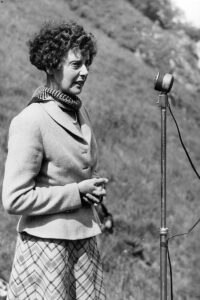
Early efforts targeted ribbon development and the lack of planning controls in rural areas. Abercrombie had famously warned against ‘ribbon development’ as it would create “glimpses through an almost continuous hedge of bungalows and houses” – a vision he believed would destroy rural beauty. Key early achievements included securing the Petroleum Act in 1928 to control roadside advertising, influencing the 1932 Town and Country Planning Act, creating the first Country Code in 1935 and campaigning for the Metropolitan Green Belt Act in 1938. It was helped by such inspiring figures as Sheffield-based Ethel Haythornthwaite, the environmental campaigner and poet.
Post-War Transformation
Following World War Two, CPRE’s advocacy contributed to significant land-use legislation. The 1947 Town and Country Planning Act addressed many of CPRE’s goals for land-use controls. After a 20-year campaign, the 1949 National Parks Act established National Parks, Areas of Outstanding Natural Beauty, and Sites of Special Scientific Interest. By 1955, the government accepted CPRE’s call for protected Green Belts around major urban areas.
Campaigns in the Last Seventy Years
CPRE’s focus has evolved to address new threats and environmental sustainability such as:
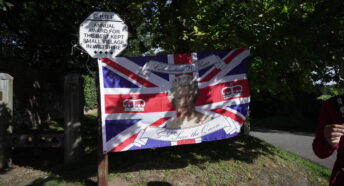
- From the 1953 coronation, CPRE launched the Village Greens campaign – later evolving to the Best Kept Village competition.
- In 1963, we successfully campaigned for the protection of England’s coastline.
- A long campaign against hedgerow loss led to legal protections in 1997.
- From the 1980s onwards, work have included promoting brownfield development, energy efficiency, and opposition to fracking.
- Longstanding work against littering helped trigger the government’s Keep Britain Tidy campaign.
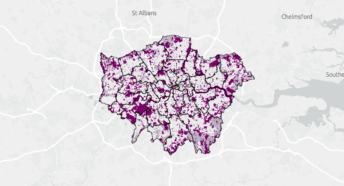
- More recently, CPRE has focused on dark skies and rural tranquillity, developing light pollution maps and promoting ‘star count’ initiatives.
- Leading up to its centenary, CPRE has also been shaping planning policy and strongly promoting rooftop solar energy, affordable rural housing and hedgerow restoration.
Standing up for the Countryside
CPRE has been celebrating a hundred years of standing up for the countryside, and a century of achievements, impact and dedication with lots of events throughout England. As Mariella Frostrup, CPRE Somerset President, puts it: “Protecting the countryside isn’t about freezing places in time or saying no to change. It’s about making better change – for people, for nature, and for the long term. “
Award-winning designer Sarah Eberle created a CPRE Show Garden ‘On the Edge’ for the RHS Chelsea Flower Show. The garden won a Gold medal and Garden of the Year. It celebrates the countryside as a living, shared space that shapes our wellbeing, our communities and our future, shining a light on the overlooked ‘edgelands’ of our towns and cities. After the show the garden was relocated to a regenerated housing development in urban Sheffield. We have also produced a short video 100 Years in 100 Seconds. There was also an exhibition at The Museum of English Rural Life (MERL) in Reading celebrating the charity’s centenary and pivotal role in shaping and protecting England’s countryside.
In April our centenary book, Future Rural: Imagining Tomorrow’s Countryside was published. Future Rural gathers together a powerful chorus of diverse voices—writers, farmers, activists, ecologists, and thinkers – and asks them to interrogate the past and present in order to imagine what lies ahead for Britain’s rural landscapes and communities. A CPRE history book Protecting the Countryside. The First Century of CPRE, written by Professor Matthew Kelly, was published in July. Both books are printed in Dorset by Little Toller Books based in Bridport.
Dorset CPRE’s Successes
Focusing on Dorset, our local branch has been campaigning to promote and protect our countryside, as well as supporting rural communities. Recent successes have included:
- Helping stop the West Dorset, Slyer’s Lane and Blandford Hill windfarms, as well as the Rampisham, Mapperton and Sadborow solar farms, which we believe would have had serious visual impact on the unspoilt Dorset countryside.
- Helping to save the beautiful Crown Meadows from a housing development we considered inappropriate in Blandford Forum.
- Working to mitigate the effects of hundreds of inappropriate planning applications.
- Campaigning throughout Dorset to control littering since our former National CPRE President, Bill Bryson, launched Stop The Drop.
- Sponsoring and judging the Best Dorset Village Shop competition until 2019 (the Best Dorset Village Competition is sadly currently in abeyance as it needs a new major sponsor).
- Helping to fund the refurbishment of Dorset’s iconic fingerposts.
- Sponsoring the annual Dorset Hedgelaying Competition, organised by the Melplash Agricultural Society. We also promote and provided funding for the Great Big Dorset Hedge initiative too.
- Providing funding to schools for wildlife related projects, with evidence of outdoor learning and introducing children to the countryside/rural life, through the ‘Barbara Vance Countryside Prize’.
- Organising a number of successful conferences: the most recent was on June 9th on ‘Getting the Balance Right between Dorset’s Housing, Nature and the Countryside’.
How will Dorset CPRE Celebrate the Centenary?
First we are organising a big party at Milton Abbey on 25th September (book ticket), with a panel of speakers, to which our members and others will be invited. Second we will be planting hundreds of trees, including England’s rarest native timber species, the Black Poplar. The main site will be at Kingston Maurward, a land-based college, which is now part of Coastland College, just east of Dorchester.
Finally we must fight resolutely this government that seems determined to concrete over the countryside and flout local democracy.
Rupert Hardy, Trustee and North Dorset Group Chairman